Major
Texas State University offers a four-year curriculum leading to a Bachelor of Science in Medical Laboratory Science. The program is accredited by the National Accrediting Agency for Clinical Laboratory Sciences, 5600 N. River Road, Suite 720, Rosemont, IL 60018, (773) 714-8880. NAACLS Standards for Accredited and Approved Programs see marketable skills description and list on pages 9-10 and curriculum requirements pages 14-16.
The Texas State MLS program is a 2+2 program. This means that the first two years of your education are core courses and prerequisites. The requirements during the first two years of study include courses in biology, chemistry, and mathematics along with courses in the humanities and social and behavioral sciences.
The junior and senior years combine clinical experiences in the affiliated clinical laboratories with advanced academic study in the MLS disciplines. You will have four (4) mandatory clinical preceptorships in the areas of Hematology, Clinical Chemistry, Immunohematology, and Microbiology. Plus, you may have other preceptorships. Since class size is limited due to the availability of space in the clinical affiliates, admission to the program is competitive and not all who apply will be accepted.
Time Requirements
If accepted into the MLS program, be prepared for an interesting, rigorous and time-consuming degree.
Students are on the San Marcos campus in Encino Hall during their junior fall and spring semesters roughly from 8am-5pm.
During the fall semester of their senior year, students are on-campus roughly from 8am-5pm most days.
During the Senior Spring and Summer, the students' time will be split between clinical affiliates and campus. The student must be able to travel to locations in the Central Texas area. The students have four mandatory rotations that are normally 2 or 3 weeks in duration. In addition, the student will have mandatory enrichment experiences during the Spring and Summer semester. Between rotations the students will return to campus for additional coursework and testing.
Texas State Facilities
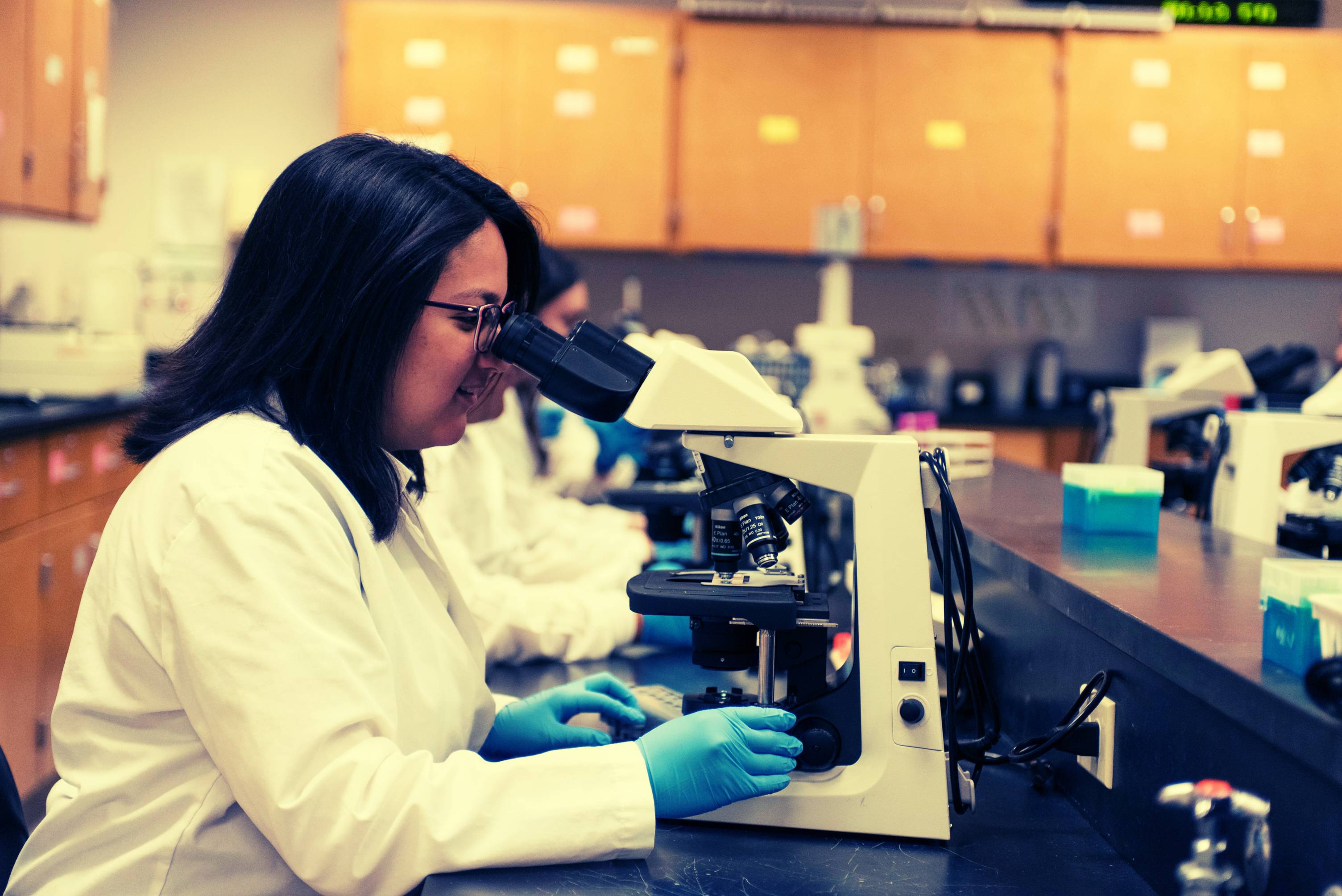
The MLS Program has four teaching laboratories, a computer laboratory, and a molecular diagnostics laboratory. The program has a LabDaq laboratory information system, Beckman-Coulter CQ genetics analyzer, Cell-Dyn 3200 hematology analyzer, Pointe 180 chemistry analyzer, and other laboratory instruments found in a modern clinical laboratory. However, our most important resources are our faculty who have educational and clinical experience in a variety of settings.
Certification
Graduates are eligible to take a national certification examination as a Medical Laboratory Scientist (MLS) of the Board of Certification of the American Society for Clinical Pathology (ASCP) or a Medical Technologist (MT) through the American Medical Technologists (AMT).